HAWAIʻI WILDLIFE ECOLOGY LAB



COMMUNITY SCIENCE
Community science is embraced by supporting education-driven projects that connect people of all ages with the natural world through art, music and storytelling.
We also offer opportunities for the public to contribute directly to wildlife research through online platforms where community members can report wildlife sitings and submit observations that assist with long-term monitoring efforts.
Through engagement with schools, local organizations and nearby communities, we promote experiences that strengthen community ties to the ‘āina and empower future generations to care for Hawaiʻi’s endemic wildlife.
Project Highlights

The Pueo Project
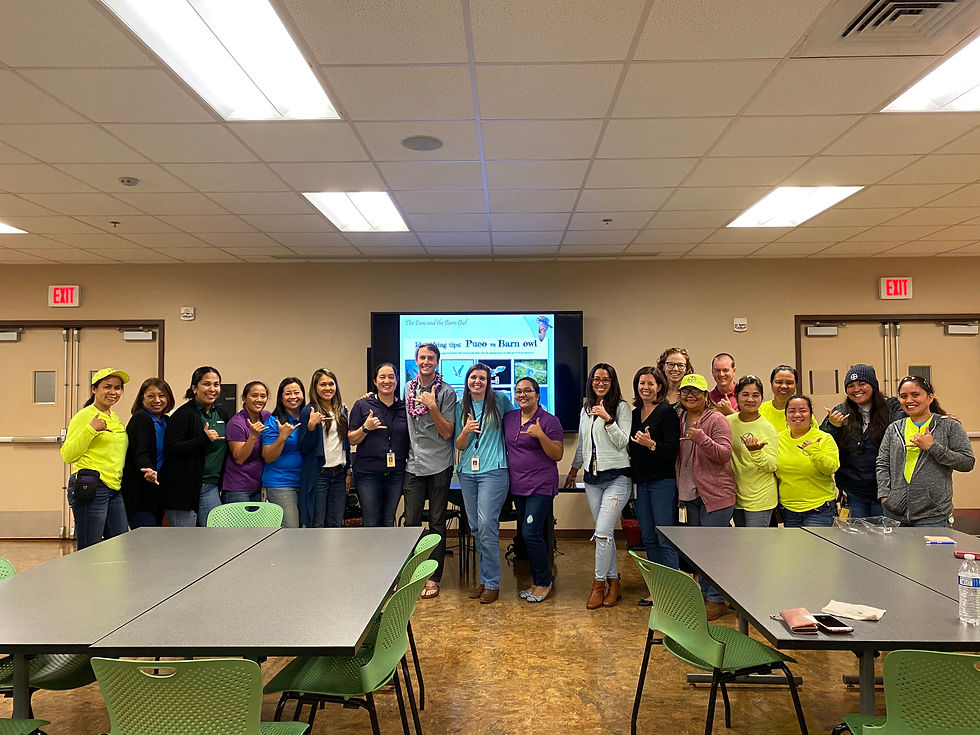
The Pueo Project expands knowledge of the Hawaiian Short-eared Owl through scientific research and broad community involvement. Through its “report a sighting” feature and online portal, supplemented by global databases such as eBird, the public can contribute observations of nests, sightings, and behaviors, expanding the spatial and temporal reach of monitoring efforts beyond what our researchers could achieve alone. These efforts support conservation planning and encourage community investment in protecting this culturally significant native raptor.

The Symphony of the Hawaiian Birds and Symphony of the Hawaiʻi Forests
Performances by the Hawaiʻi Symphony Orchestra have reshaped conservation education in Hawaiʻi by uniting music, culture and science to deepen awareness of native species and ecosystems. Thousands of students have experienced orchestral performances that use original music, animation and storytelling to highlight the challenges facing Hawaiʻi’s wildlife. These programs are supported by extensive online teaching materials that broaden access to place-based learning. Together, the symphonies strengthen ecological literacy and inspire future generations to care for Hawaiʻi’s unique birds and forests.